The first edition of our acceleration program Baking the Future, came to an end yesterday with the celebration of the “Demo Day”, a virtual event that aimed to present the projects of the three accelerated startups and communicate the opening of a second edition.

Innovation is part of our DNA. The company itself was born from an idea that revolutionized the bakery sector and since then, Europastry has always sought to be at the forefront of the sector, anticipating new trends and offering its
customers the most disruptive products. “If you stop innovating you end up losing competitiveness and capacity for growth. That is why it is very important to keep reinventing yourself and never think that what you have is for life“, said Jordi Gallés.

The Baking the Future acceleration program plays a very important role in this constant renewal. Startups help us to innovate and open up new opportunities that allow us to take our products to the next dimension, while at the same time we provide them with all of Europastry’s muscle so that they can grow and develop their projects with the greatest possible resources.

Baking the Future

“CEREAL DEMO DAY”

The celebration of the “Demo Day” took place at Cereal, Europastry’s Innovation Center, where the first idea was born and where today we continue to work with great passion to bring to market the best products in the sector. To conclude the first edition of the Baking the Future program, the three accelerated startups presented their projects whose drivers are sustainability and health:

Agrain

  • The Chilean startup Done Properly with its cutting-edge technology which, through a bioprocess of fermentations, manages to reduce the amount of salt enhancing the natural flavors of food.
  • The Danish startup Agrain with its new way of producing food by recycling grains used in the brewing industry.
  • Spanish startup Bread Free, is the world’s first company capable of creating gluten-free wheat flour to make bread, pasta, and other bakery products.


BAKING THE FUTURE OPENS A NEW SELECTION PROCESS

Building an open innovation model for Europastry is the goal of the Baking the Future program. For this reason, we are opening a new selection process for Those startups that want to revolutionize the bakery sector with projects related to sustainability, improving the consumer experience, health, and food solutions and technologies aimed at improving production without losing sight of the quality of the products.

Starting today, those interested in being part of the project can apply on the Baking the Future website. Selected startups will have access to all the company’s resources – from mentoring sessions, workspace, and access to Cereal’s state-of-the-art technology labs to business plan design – to develop their products and test their viability in the market.

MOA Foodtech is a Spanish startup that combines biotechnology and artificial intelligence to transform waste and by-products from the agri-food industry into a 100% sustainable ‘‘new generation protein” of high nutritional value.  Their goal is to implement new technologies that promote a fairer, more compassionate, and more sustainable food system while still being appealing to consumers.

We had the opportunity to interview Bosco Emparanza García, CEO and founder of MOA Foodtech, one year after going through our Accelerator Program. Discover what this meant to them, the advice he still retains, and how he sees MOA Foodtech in the future.


How did the idea of founding a company as MOA Foodtech arise? What is the main goal of the company?

The world is currently in a critical environmental situation. By 2050, agriculture will need to feed 40% more people, produce 70% more food, using only 10% more land.
The whole MOA team was concerned about the situation and the huge impact the agri-food industry has. For this reason, the three founding partners, Susana, José María, and I, made this decision to leave our jobs as scientific directors in a biopharmaceutical, M&A, and commercial company, respectively. As a step towards developing a sustainable agriculture-food model, we set out to investigate the following: Can we use waste and by-products from the agri-food industry to produce high-value food using biotechnology?


What were the benefits of working with Eatable Adventures in your first steps until the business was consolidated?

The beginning of our journey was a time of uncertainty. That same year was the confinement, and we found ourselves leaving our jobs. At that point, the Eatable Adventures team came on board; they believed in the project and shared our ambition. The solution we wanted had to be global, and thanks to Eatable’s way of working and networking, we were able to start a global project. As time passed, the most rewarding and intense hours of the week were our meetings with Mila and José Luis, when we wrote down our plans to overcome the next hurdle, and we did.


What is the most valuable piece of advice José Luis has given you in our Acceleration Program?

Having spent so many hours working together, it is impossible to choose just one. But without a doubt, there have been two in particular that made us change our approach and begin to see things more clearly.

The first, and undoubtedly essential, was that we had to seek international investment. This was the best way to position ourselves as a credible project and thus begin to grow.
And the second was to consider what we really were. Instead of thinking, we were just a protein manufacturer, we had to think of ourselves as a platform.


What is in the near future for MOA Foodtech and where do you aspire to go in the long term?

Our goal is to be a global project, so we are scaling the technology to an industrial level and developing solutions focusing on the Asian (where protein consumption will grow the most), European and American markets. In addition, we are working on applications not only in meat analogs but also in snacks and dairy analogs. We are also developing new processes utilizing by-products and residues, and perhaps most importantly, we’ve developed an artificial intelligence tool that helps us develop all of the above more efficiently and quickly.

Check out our other Alumni Interviews here.

The foodtech sector is an emerging and dynamic sector dedicated to improving the entire food industry value chain sustainably. This intersection between nutrition and technology is changing the traditional food and beverage sector, prompting existing players to rethink many of their insights into manufacturing processes, consumers, and the market in general.

In recent years, Israel has positioned itself as one of the world’s FoodTech leaders, and it has succeeded. In just 70 years, it has managed to turn its threats into opportunities and become a world reference in innovation, responsible for some of the most disruptive and revolutionary technologies in multiple areas. 


Investing in Spain’s FoodTech Sector

In our country, investment in the foodtech sector has tripled in one year after national startups have raised 695 million euros in 2021, which is 220% more than the previous year, according to data from ICEX’s recent report. Thus, the Spanish ecosystem is the fifth foodtech ecosystem with the highest investment in Europe after Germany, the United Kingdom, France, and the Netherlands, offering numerous opportunities for innovation, some of which make this country a global benchmark.

Webinar Israel

Imagine how powerful these two ecosystems would be if they were connected? That’s exactly what happened during the webinar on February 22. The Foreign Trade Administration of the Ministry of Economy of the State of Israel engaged Eatable Adventures and leading Spanish corporations, such as Europastry and Pascual, to be part of the conversation and share best practices in open innovation.

Although we still have many challenges ahead of us, all levels of government, associations, clusters, and large food companies are working simultaneously to address them. We live in the era of collaboration, in which people, startups, investors, and administrations, are allied to build a better future; and of course corporations in the agri-food sector cannot miss this joint work.


Open Innovation Programs: Mylkcubator & Baking the Future

Startups in this sector are undoubtedly an engine of innovation that can bring a lot to the industry. In order to benefit from this, we need to create open innovation programs that identify the best startups to partner with, lay the groundwork for this collaboration, and channel joint efforts that benefit both parties.

Mylkcubator Companies of all sizes and nationalities are implementing programs along these lines every day. Important Spanish food companies have developed their open innovation programs, accelerators, and investment arms, such as Pascual’s Mylkcubator and Europastry’s Baking the Future. With these programs, companies can discover new business models, explore new channels with their consumers, reinforce the sustainability of their operations, diversify in categories or geographically and, above all, increase the efficiency of their business.

baking the futureThere are many ways in which companies in the sector work on open innovation, and it will depend a lot on the culture of the company, the position it is in, and the structure it has. In this regard, it is always helpful to have an ally who can advise the company on how to move forward, identify startups to work with, and lay the groundwork for collaboration with them, such as us, Eatable Adventures. 

If you want to know more about the Spanish foodtech sector, visit our recent article.

Ekonoke is a Madrid-based company with a disruptive business model. It produces hops of the highest quality, ensuring sustainability and reliability of supply, and developing climate-resilient agricultural solutions with the least use of resources.

We had the opportunity to talk with Inés Sagrario, CEO and Co-founder of Ekonoke, which participated in our Eatable Adventures Acceleration Program (EAA) in 2019. Read on to learn more about Ekonoke’s experience as part of the acceleration program.

Could you narrate Ekonoke’s journey since you’ve been part of our accelerator program?

Ekonoke joined the Eatable Adventures Accelerator Program in September 2018. Our original project had nothing to do with what we are now. Even the partners at the beginning told us the project wasn’t quite right, but that they were confident in our team. We made fundamental decisions together to put the project on a better track, becoming who we are now.

In the first place, we suffered some confluence of our work with the Eatable Adventures team and the alterations of climate change we had to face. In March 2019 there was a beastly heatwave in Madrid, passing 40 degrees in the greenhouse, which was not prepared for it. This led to a drop in production, making us unable to get to serve customers we already committed with.
During this time we realized we couldn’t continue working in a greenhouse, and we had to switch to indoor cultivation.

With support from Eatable Adventures, we also realized that our vertical garden model focused on Horeca was not a scalable project, but rather an artisanal one. Responding to what our restaurant clients requested, we made our first change by offering ready-for-harvest live mini-gardens. Through Eatable, we were introduced to a variety of events, and in one of them, we met our partners Tallos microgreens. In combining the two projects, the brand Ekonoke was born.
Simultaneously, we continued testing with crops that did not have climate risk, one of them being hops, which has led us to what we are today.


Walk us through your rebranding process decision, why did you decide to focus only on one type of crop, as well as only selling your products at a B2B level?

We put together the situation Ekonoke was in at the time. On the one hand, our mini-gardens were not being profitable. Despite receiving very positive feedback from customers, we didn’t have the level of repetition that we had envisioned in our pre-covid business model.

On the other hand, having already been working with hops and being in contact with breweries, we realized that the brewing industry faced an important challenge of supplying their raw material sustainably and reliably.

Putting these two situations together, the answer was clear. One of the strongest supporters of our decision to completely change our business model has been Jose Luis Cabañero, CEO of Eatable Adventures.  


What is the most valuable piece of advice you have received from Jose Luis in our Accelerator Program?

First of all, I would like to emphasize that the greatest advice I have received from Jose  Luis was not really during the Acceleration Program period. Once you are part of the program, you create bonds, connections, and relationships that last a lifetime. It is very valuable to have a team behind your project with a vision and the ability to guide and support you as you make future decisions.

Having said that, the biggest piece of advice he told us was to decide to focus on growing hops. It was hard to accept and put aside our mini-garden project, but after long conversations with Jose Luis, he made us understand that the future of Ekonoke was in being a hops company.


Where do you envision Ekonoke in the short and long-term future?

In the short term, we are already working to have our first commercial-scale hop growing facility in Galicia. We want to show the world that different types of crops can be grown in different ways, starting with hops, so that food and ingredients do not have to travel thousands of miles, but rather the knowledge and technology will do.

In ideally 4-5 years, we will have our indoor hop growing facilities available worldwide, being the leading company that has completely revolutionized the hop industry.


The first Incubation Program for Innovation in HORECA Projects developed by the Madrid City Council and managed by Eatable Adventures just launched. Madrid Food Innovation Hub is a business incubator aimed at promoting entrepreneurship, innovation and technology in the agri-food value chain. This is a pioneering experience in the world that will revolutionize the global industry from the city of Madrid. 

Madrid Food Innovation Hub will develop during the year several incubation and acceleration programs, with different approaches; and a deep training program for entrepreneurs in any area of the agri-food chain. The center will work to promote entrepreneurship in Foodtech, supporting the Madrid startup ecosystem, in coordination with the strategy developed from Madrid Emprende, which has led the capital to lead the ranking as the best Spanish city for entrepreneurship and the sixth at European level, according to the Financial Times.

All these efforts will be developed from the facilities in the Villaverde district of Madrid Food Innovation Hub, a center that has a coworking space for entrepreneurs and a kitchen-laboratory of more than 300 m2, equipped with everything necessary for them to make concept tests, evaluation of prototypes and everything needed to develop their projects. This business incubator will be managed by the company Eatable Adventures with José de Isasa in charge of the project.

Incubation Program for Innovation in HORECA Projects

Madrid Food Innovation Hub starts its activities with its first Incubation program, focused on innovation for HORECA projects, aimed at finding new gastronomic concepts, new business models or tools/projects that add to the current Horeca sector. The selected projects will have the ambition to revolutionize the sector, with a clear focus on the commercial viability of the projects and their contribution to the industry.

The program, which is completely free of charge for participants, will last 12 weeks, during which those selected will receive theoretical and practical sessions, tutorials with experts, will be able to make use of the center’s facilities (both the coworking space and the kitchen laboratory), and will end the program with presentations of their projects to potential consumers and investors.

Among the possible areas in which the projects could be framed, tools for the digitalization of restaurant management will be assessed, from purchasing, management, operation, scandals, marketing, to payments; new distribution channels, such as Delivery, Grab & go, dark kitchens, automated services, corners in establishments…; new gastronomic models and restaurant concepts, both in the dining room and in the kitchen or innovative technological tools applied to the channel such as business intelligence, machine learning, application of artificial intelligence, automation, robotics…

It is aimed at projects with less than 12 months of life, that have not received previous investment, that address the HORECA sector with an innovative perspective, that have an ambitious team and are based in the Community of Madrid. Special value will be given to projects promoted by unemployed or economically vulnerable people.


“The Madrid Hospitality Industry has suffered significant damage in the last 18 months due to the impact of COVID-19 and the Madrid City Council has developed a multitude of policies aimed at supporting it and mitigating its effects. With Madrid Food Innovation Hub we are going even further, looking for the future solutions that will help the HORECA sector to evolve and continue to be the global reference it is today” comments Ángel Niño, Delegate Councilor for Innovation and Entrepreneurship of the Madrid City Council.


“Madrid is today a global reference in entrepreneurship, with one of the most solid ecosystems of startups and with Madrid Food Innovation Hub we will deepen in one of the sectors with more potential, foodtech. The capital has the potential to lead the search for solutions to changes in consumer habits and the development of new technologies, driving business development in this area,” said José de Isasa, Director of Madrid Food Innovation Hub and founding partner of Eatable Adventures.


The deadline for applications is Sunday, September 19. The complete rules are available at www.madridfoodinnovationhub.com 

In collaboration with CNTA, we have put together a summary of the most relevant arguments made at the event Future Food Tech Alternative Proteins. Some of these are the potential of technologies such as precision fermentation or synthetic biology as ways to obtain protein alternatives, as well as predicting that this trend is likely to continue to grow.

CNTA, National Centre for Food Safety and Technology, is a private non-profit making association. Since 1981, the aim of this research centre has been to contribute towards improving the competitiveness and quality of the food sector. Its work is focused on the fields of food science and technology, biology, chemistry, agronomic engineering, food sciences and nutrition.

What is contributing to this acceleration in the so-called alternative protein revolution? Why, as experts and international foodtech leaders point out, are the “stars aligning”? Here we summarize some of the keys:

Technology boom helps: many breakthroughs in precision fermentation and synthetic biology

If there was one term redundantly mentioned at Future Food Tech Alternative Proteins it was “precision fermentation”. Undoubtedly, it is one of the trendy technologies to meet the challenge of the search for alternative proteins. During the event, it was predicted that its progressive implementation will make it possible to continue producing ingredients with technological and nutritional characteristics capable of matching and even surpassing animal sources.

It is also a sustainable and efficient technology, which are very valuable qualities considering that the food industry faces the challenge of mitigating its climate impact in the coming years. Thus, the progress that can be made in the application of precision fermentation will open up great opportunities in the food industry.

The food industry is also looking very closely at the potential offered by synthetic biology. Numerous startups are succeeding in creating very promising cell-based products. So far, cell-based alternatives are the ones that are best able to replicate whole cuts (steaks, chops, sashimi…), as they are able to offer the consumer organoleptic and nutritional qualities that practically match those of the “originals”. After all, as Michael Selden, CEO of Finless Foods, pointed out, “laboratory developments are managing to reproduce what really happens in nature”. Looking to the future, regulatory and price barriers remain to be overcome so that these products can have a real and extensive market penetration.

The strength of new sources: algae, fungi, SCP…

Little by little we will be seeing more products based on alternative proteins from a wide variety of sources. At Future Food Tech Alternative Proteins we were able to see examples of how, increasingly, sources are diversifying with interesting results and potential market implementation. From the commitment to algae varieties such as the red algae used by Triton Algae or the chorella used by Algenuity, to the commitment to mycelium by Meati Foods or the unicellular protein Euglena by Noblegen. These cases make it clear that there is life beyond plant-based sources.

future food tech alternative protein

Noblegen presenting its ‘Euglena’ SCP development at Future FoodTech Alternative Proteins.

Even so, work continues in the plant-based segment, where it is also possible to find sources other than the usual ones (chickpea, pea, soybean). To make this search more effective, the need for a better and more detailed knowledge of the nutritional properties of new plants or legumes was put on the table, applying technologies that make it possible to characterize the ingredients from a technological (texture, stability, etc.) and nutritional (amino acids, digestibility, etc.) point of view.

Greater knowledge will generate even more possibilities for diversification.

“There are startups that are scaling very fast”.

Sean O’Sulivan, of SOSV Imvestment, gave another of the keys that is contributing to the acceleration of developments and the expectation that new products can slowly make their way onto the agenda of more consumers. “There are startups today that are scaling very fast and that is a huge step towards success,” he said in the opening keynote at the congress. One of the reasons for that ability to scale is the fact that the most disruptive startups are counting on a solid technological base. This is also attracting the attention not only of investors but also of large companies in the sector. Looking to the future, everything suggests that this technological solvency will gradually increase and this will allow the innovation boom to be aligned with the investment boom, whose upward trend has been a constant in recent years.

The forecasts, therefore, continue to be very optimistic. With greater technological solvency, it will be possible to scale up and achieve products that can compete on price in the market, reaching a larger number of consumers. This is undoubtedly one of the keys to ensuring that the much-talked-about acceleration does not come to a screeching halt.

The food industry is facing a scenario in which it can connect with a consumer who is increasingly committed to sustainability and who sees alternative protein sources as a strategy in line with this commitment. If we add to this the fact that alternatives to animal protein are already an unavoidable part of the future agenda of institutions and administrations, the scenario is favorable for the “revolution” to consolidate its change of gear and reach cruising speed.

The original content was written by Mikel Arilla, CNTA’s Vanguard and Trends Technician, is available here.

In collaboration with CNTA, we bring you closer to the impacts that the ‘new wave’ of protein can generate in agri-food companies.

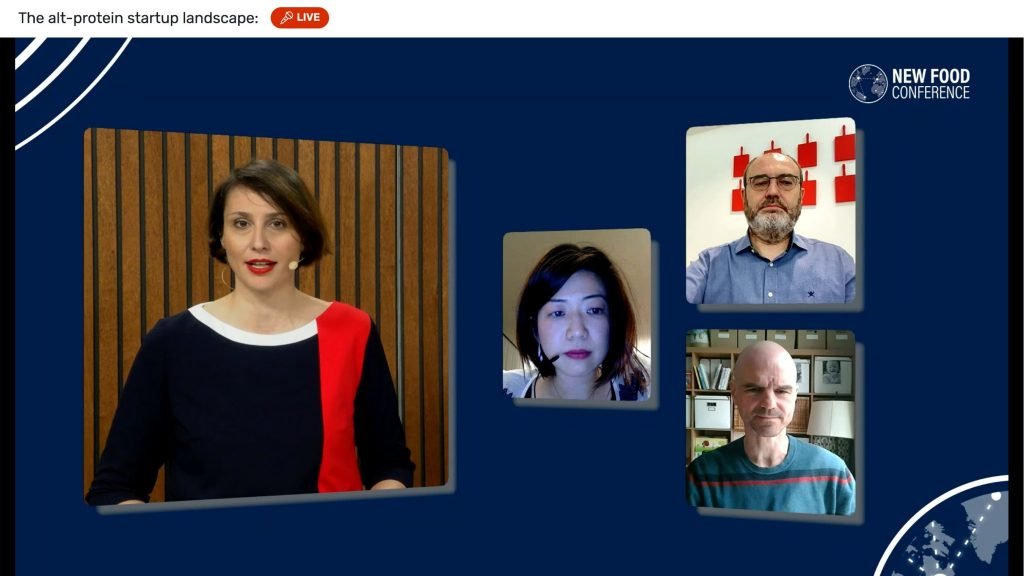
The virtual event New Food Conference took place April 28 – 29 outlined some of the most important challenges that the food industry must address for the development of new protein sources and their progressive introduction into consumers’ menus. 

CNTA, National Centre for Food Safety and Technology, is a private non-profit making association. Since 1981, the aim of this research centre has been to contribute towards improving the competitiveness and quality of the food sector. Its work is focused on the fields of food science and technology, biology, chemistry, agronomic engineering, food sciences and nutrition.

The New Food Conference, organized by ProVeg gathered global leaders in the alternative protein industry, from renowned food brands, to startups, NGOs, academia, and the political sphere. 

One of the topics covered in the event was about new technological horizons and the connection with the circular economy. Speakers explored themes such as what can be expected from technological advances, and how they will contribute to making the development of proteins from alternative sources more sustainable, efficient and scalable. Some solutions were presented, amongst them high-moisture extrusion or precision fermentation have come in strong from new promising startups.

new food conference

José Luis Cabañero, Founder & CEO of Eatable Adventures, spoke about the “incredibly tasty and mimicable” products that are being manufactured thanks to technological advances and focused on two concepts: the potential of biotechnological processes and, on the other hand, the suitability of linking protein production with another strategy of marked sustainability: the valorization of by-products. A clear example is the use of food by-products as substrates for precision fermentation.

Other topics were discussed, including the development of other plant-based categories including egg products, fish seafood and more and the importance of not only achieving sensory similarity to the animal counterpart but also having a significant nutritional value. This way it allows consumers to perceive it as healthy, in addition to being cleaner.

Additionally, consumer acceptance, clean label, transparency and evidence were hot topics at the New Food Conference. Recent market research shows that consumers are increasingly open to trying new alternatives to animal-based foods. 

On paper, cultured meat would provide similar nutritional profiles to the corresponding conventional foods and would add some advantages over them, since they would not use antibiotics and the production conditions would reduce the possibilities of contamination with pathogenic microorganisms.  However, the evidence on these nutritional benefits and better environmental balances will not be confirmed until an industrial production level is reached after completing the scaling-up processes in which several companies are currently involved.

How will it impact the industry?

All these views on alternative protein sources invite us to imagine a future in which we will most likely see relevant changes. Legislative updates will make way for new labeling regulations and product approvals that until now seemed too futuristic or unlikely at a market level. Given that investment in the development of alternative proteins has not slowed down during the pandemic and looks set to continue, more and more new products are expected to hit the shelves and retail outlets. Will they eventually become established among a more mainstream consumer? Only the future will tell.

The original content written by Inés Echeverría, R&D director of CNTA is available here.


Spanish cuisine is a central axis in the promotion of Spanish food and wine. Within this framework, ICEX has developed the “Restaurants from Spain” certification program that provides a quality distinction for out of Spain establishments to offer authentic cuisine from this country. 

This international certificate has been conferred applying the principles of objectivity, verification, practicality and transparency. The evaluation committee is formed by the main institutions of the gastronomy sector in Spain.

The main objective of “Restaurants from Spain” is to be an instrument for the support and recognition of restaurant initiatives that are focused on cuisine, guaranteeing the level of quality of these establishments. 

The idea is to establish quality standards and criteria for the consumer who is looking for quality Spanish cuisine, as well as models that can be followed by restaurateurs who may wish to offer our cuisine in other parts of the world.

Last year, an experimental phase was carried out in which 26 restaurants obtained the certificate: 13 of them in the United Kingdom, 6 in Singapore, 4 in China and 3 in Germany. In 2021, the number of certified restaurants will increase and expand to countries such as Belgium, the Netherlands, Ireland, Switzerland, the United States, Mexico and Japan.

The restaurants that have the distinctive “Restaurants from Spain” offer a recognizable concept of Spanish gastronomy based on tradition, quality products and sharing culinary identity in every detail.

The certification will be renewed annually and will provide different benefits for restaurants, such as specialized training for the dining room team, both in gastronomy and in Spanish wines, in order to expand the Spanish culinary offer available on the menu.

The selected scene to officially communicate the “Restaurants of Spain” international certificate to the international public of the sector, will be in “Madrid Fusión”, the global gastronomy congress that will take place in Madrid from May 31 to June 2.

pascual innoventures

The Pascual family created and launched today Pascual Innoventures, a different model of Corporate Venture Capital that aims to identify and develop new businesses that will give a better future to food. It’s an independent society from the company Pascual that looks to find new external opportunities, while maintaining the same value of ‘giving our best’ when looking for startups that are innovating the food tech sector.

Pascual Innoventures is based on 4 pillars: Explore, Invent, Invest and Accelerate.

What sets them apart is the addition of inventing and investing, since most investment programs are purely financial in the agrifood industry. Innoventures’ mission is to help startups in early stages to develop and grow, becoming an accelerator partner that will accompany the process from development to conception to the search for new investors.

This means that the selected startups to participate in the program will have a shared purpose and philosophy with the company, and will operate in all the territories where Pascual is present. Whether it is sustainability, circular economy, animal welfare, or health, it’s the similar values that will allow the creation of the future Pascual companies. 

The ‘Invent’ side of it is the development of tools and necessary processes to create their startups through their own financing, society, talent and way of working.

Who is behind Pascual Innoventures

The ones behind this program are Gabriel Torres Pascual, third generation of the Pascual family and director of Pascual Innova; and Sejal Ravji, a biochemical engineer from University College of London and doctor in rheology, director of Pascual Innoventures. Both have impressive international backgrounds and have gained extensive work experience in different fields before joining this adventure.

Having grown up in the Pascual family, Gabriel Torres affirms that entrepreneurship and innovation are part of his genes passed on from his grandfather – also to not conform to the rules, dream big and take risks. With this making up his DNA and that of Pascual Innoventures’, they are looking towards the big picture and long-term to shape the future of food with innovative startups.

Innoventures and Venvitotech

Innoventures has recently closed a 5-year contract with Venvirotech, a startup in biotechnology that transforms organic residue in bioplastics through bacteria. Together, they will develop a project called “Magic Water” to transform untreated water generated by the company into biodegradable material – achieving a circular economy.

In addition to Venvirotech, Pascual Innoventures is working with several other strategic projects that will bring solutions to some of the most important challenges in the agrifood sector, such as food security, health & wellness and circular economy.

Eatable Adventures looks forward to accompanying closely the growth of Pascual Innoventures and witnessing all the progress they will achieve in the foodtech world.

Webinar by ICEX Spain Trade & Investment, with the global network of Economic & Commercial Offices of Spain

We are excited to invite you to this upcoming event on April 13 2021 by ICEX Spain Trade & Investment, together with the global network of Economic & Commercial Offices of Spain. 

The event consists of a series of 4 webinars on foodtech. This initiative revolves around strengthening the business network of the rising Spanish ecosystem, showing it to the world and to present success stories and interesting projects from other countries to enhance collaboration.

Spain is a leader in the European food industry and is developing a highly unique ecosystem with more than 400 startups working hard on developing and improving ingredient production, transformation efficiency and optimizing the sustainability of people and the planet through innovative technological solutions that impact the entire agri-food value chain. These projects also have the potential to ease the access to better food, reduce food waste and limit the impact of industrial waste.

The first webinar on April 13 will bring together companies, entrepreneurs, and startups that are working in the alternative protein segment around the world, both plant-based and cell-based, highlighting the importance of this category in the future of the food system.

There will be two sessions of the same webinar with different local roundtable participants, the first in Singapore and the next in Los Angeles. Both sessions will be approximately 1h30 long.

We will hear from successful speakers in both sessions, including Santi Aliaga (CEO Zyrcular Foods) who will discuss the full integration of the value chain and a few Spanish pioneers such as Bernat Ananos (Co-founder & CSMO Heüra), Giuseppe Sconti (CEO & Founder Novameat) and Iñigo Charola (CEO Biotech Food).

Our CEO José Luis Cabañero (Eatable Adventures) will also join both sessions welcoming the guests and participating in the international roundtable.

Each session also involves different remarkable speakers shown below in their respective locations.

ICEX Singapore Office session

April 13th at 9am (Madrid, GMT+02:00) ICEX Singapore Office session: Register here.

Guest Speakers at the International Roundtable:

  • Low Teng Yong – Deputy Director Food Regulatory Division, Singapore Food Agency
  • Taly Nechushtan, CEO INNOVOPRO
  • Maarten Bosch, CEO Mosa Meat
  • Yee Kwan Seck, Director Agency for Science, Technology and Research (A*Star) Singapore
  • Israel Speaker. TBC

ICEX Los Angeles Office session

April 13 at 6pm (Madrid, GMT+02:00) ICEX Los Angeles Office session: Register here.

Guest Speakers at the International Roundtable:

  • Helen Munday  President Institute of Food Science & Technology
  • José Luis Cabañero, Founder & CEO Eatable Adventures
  • The Good Food Institute, LA Speaker. TBC
  • Juan Aguiriano, Group Head of Sustainability, Technology Ventures, Kerry Taste & Nutrition

You don’t want to miss this event! The webinars will be hosted on WEBEX, after the registration you will receive the link for connecting.

See you there!