The Spanish startup Innomy has raised 1,3 million euros in its Pre Series A funding round. The round was led by international investors as Corporación Cervino, Rockstart, Zubi Capital, Eatable Adventures and the National Center for Technology and Food Safety (CNTA), who have taken equity stakes in the company to scale the startup’s disruptive technology and promote a much more sustainable and healthier protein consumption alternative in other markets.

The leading Argentinian team, composed by CEO and co-founder Juan Pablo de Giacomi, biotechnologist COO and co-founder Pablo Sánchez Rey, and mycologist CSO and Technology Partner Francisco Kuhar, has dedicated years of research to the properties of mushroom-based proteins and their benefits for the health of people and the planet.

Innomy is the third foodtech Spanish startup announcing its first funding round after successfully completing the acceleration program Spain Foodtech developed by Eatable Adventures, in collaboration with ICEX Spain Export and Investment and the National Center for Technology and Food Safety (CNTA) and the Rockstart AgriFood program. Disruptive startups Cocuus and Moa Foodtech were also selected in Spain Foodtech program.
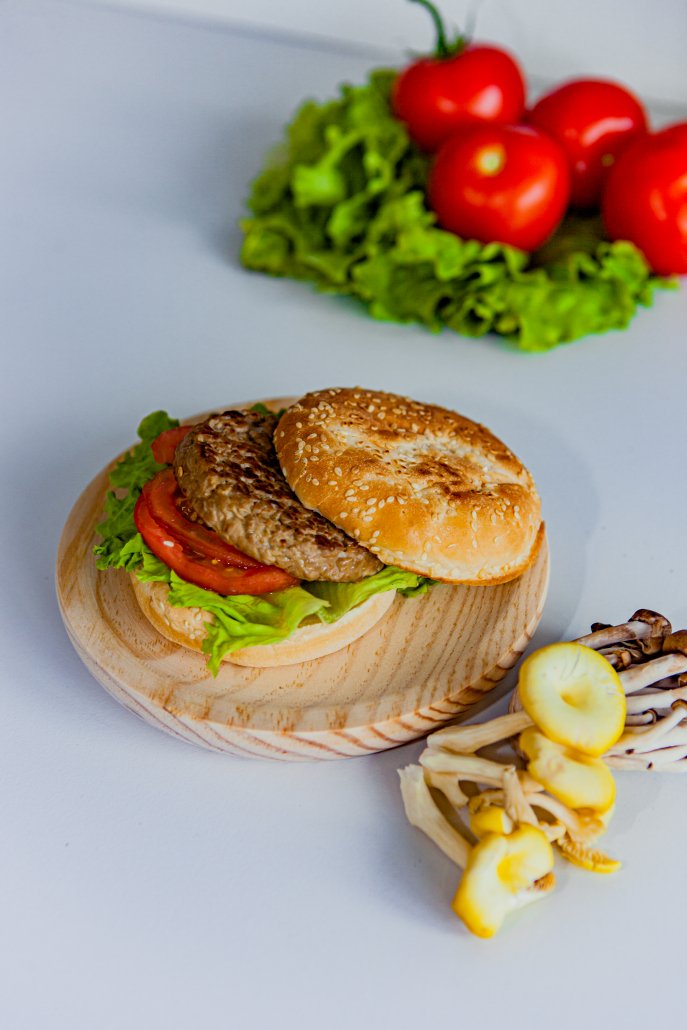
Juan Pablo de Giacomi, CEO and founder of Innomy states “We were born as a platform to channel many years of research in the field of the properties of edible mushrooms. Our mission is to respond to consumers that demand good food products for their health but also for the planet’s wellbeing. We want to reach new markets and bring our product to thousands of people”.

Mycelium, a filamentous, protein-rich ingredient extracted from the root structure of mushrooms is considered to be one of the most promising sources of protein for the future. Its quality in terms of nutrition was recognized by scientists a long time ago, but its current production for human consumption is not yet widespread. Furthermore, the fact that fungi do not produce cholesterol or significant amounts of saturated fats has redirected the attention of the food industry towards them.

On the other hand, José Luis Cabañero, CEO and founder of Eatable Adventures notes “We are very proud to be part of this new milestone that consolidates the leadership of the Spanish foodtech ecosystem. In the last few months, we have managed to raise Funding rounds of an average of 1.8M for three of the startups that have been selected in our acceleration program. We continue to bet on disruptive technologies that impact the way food is produced and consumed, ensuring food safety for all”.

Mark Durno, Managing Partner AgriFood of Rockstart said: “At Rockstart, purpose driven and determined founders are central to our investment selection. In the case of Innomy, the founding team is composed of specialists in mycelium and have all shown amazing commercial insight and humble curiosity during the mentor sessions throughout our accelerator program. We are delighted to make our second investment in the company.”

“With the entry into the capital we formalize the collaboration we have maintained in recent years to develop Innomy’s proprietary technology. And now, with this financial injection, it will be possible to bring this technology to the market and continue contributing to transforming the future of food to make it healthier, more sustainable, safer and available to everyone,” said Héctor Barbarin, CEO of CNTA.

In the context of the current global environmental and demographic challenges, meat alternatives, such as mycelium, are an effective solution to reduce meat production effects, which are responsible for almost 60% of all greenhouse gasses generated by food production, according to FAO data.

Innomy has been awarded in the fourth edition of the ‘Ingenia Startup Awards’, promoted by the Spanish Federation of Food and Beverage Industries (FIAB), the Technology Platform Food for LifeSpain (PTF4LS) and the Ministry of Agriculture, Fisheries and Food (MAPA). In addition, it has been a finalist in the Foodtech Heroes 2022 in the F&A category and has been chosen as one of the top 15 foodtech startups according to El Referente.

In the dairy industry, cell cultures and fermentation techniques are beginning to demonstrate industrial and commercial viability, as shown by the growth of investment in this sector and the emergence of new startups using these technologies as their foundation. Proof of this is that investment in the dairy segment has tripled in 2021, compared with 2020, according to Dealroom data analyzed by Eatable Adventures. Also, according to data from The Good Food Institute, fermentation companies have raised $1.7 billion, which accounts for one-third of all investments in alternative proteins. 

Research, innovation, and technology make it possible to develop new production and food transformation models that allow us to improve existing products and create new ones. By remaking the same proteins and fats from dairy, but without animals, formulators are trying to create dairy alternatives that closely resemble traditional dairy products, thanks to disruptive technologies like cell agriculture and fermentation. 

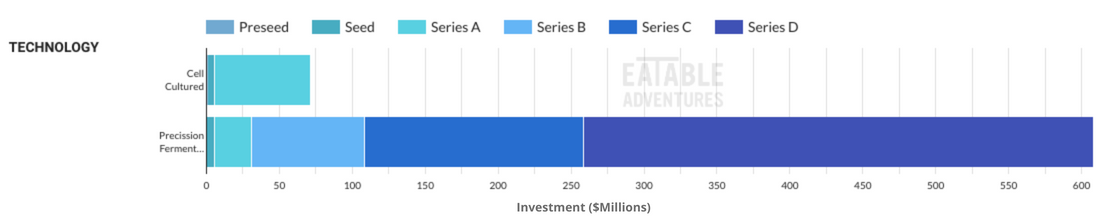
The following extract from the FoodTech Market Intelligence Report – Alternative Dairy by Eatable Adventures highlighting the technologies and startups debuting in the Dairy Industry demonstrated that precision fermentation continues to gain momentum among new startups in the sector.

Alternative Dairy Startups Momentum

Source: Dealroom data analyzed by Eatable Adventures

From Eatable Adventures data, we find that in 2021 the alternative dairy fermentation startup, Perfect Day, debuted the fermentation investment profile after receiving $350M in funding, followed by Remilk at the beginning of 2022, receiving $120M.

Additionally, according to more Eatable Adventures data, we can state that precision fermentation technology is highly mature at the moment in terms of investments, meaning that the fascinating technology that cell culture is, is still ripe for innovation and is estimated to grow exponentially in the upcoming years.

Cell agriculture and fermentation in the dairy industry

Source: Dealroom data analyzed by Eatable Adventures


Precision fermentation is not only very mature in terms of investment, but also in terms of technology development. Foods containing ingredients made with this technology have been around for decades, and we are eating them on a daily basis. A recent article by Sonalie Figueiras from Green Queen features different precision fermentation foods and products we have been consuming, including enzymes used in food production (e.j pectinases which help make fruit juices clear), vitamins we take in supplement form or powder, natural flavors added to certain foods (e.j vanilla flavoring), and even cheese (rennet, a key ingredient in cheese production, is produced via precision fermentation). 

On the other hand, cell-cultured technology is a promising technology for animal-based proteins but still needs further development and acceptance.
By using this method, meat is produced with the same types of cells arranged in the same structure as animal tissues, delivering identical sensory and nutritional properties as conventional meat. Nevertheless, there are still many obstacles for cellular agriculture to overcome such as regulatory aspects, consumer perception, and socio-political challenges, but that doesn’t negate the fact that is a rising trend that entrepreneurs and investors, and companies should follow.

Accelerating the market through Open Innovation Programs

In this food revolution, open innovation programs and synergies between big companies and startups are of major importance to accelerate growth and assist new startups to reach their objectives.  For instance, Mylkcubator, the global incubation program led by Pascual Innoventures, and Eatable Adventures, recently launched its second edition and are currently seeking projects with innovative solutions in the cellular agriculture spectrum for the dairy industry. 

If you have THE idea or project regarding disruptive innovation in the dairy industry using cell agriculture technology, visit the official website mylkcubator.com and get to know all the details about the program.

For further details regarding Mylkcubator, click here.

  • The brewery along with the accelerator Eatable Adventures, are calling for startups from all over the world to participate in a new innovation challenge for the beverage sector.
  • The selected entrepreneurs will have the opportunity to develop a product test together with Mahou San Miguel’s team of experts.

Mahou San Miguel, a 100% Spanish family-owned beverage company and leader in the beer sector in Spain, launches the Rethink Your Drink Challenge, a new challenge to discover the drink of the future. As part of its Barlab Ventures project, along with Eatable Adventures, one of the three leading global food technology accelerators, the brewery wants to offer an open innovation platform for the entire food and beverage sector.

From today until September 5, startups from around the world with a differential, sustainable and innovative proposal that generates a transformative impact on the traditional beverage industry can submit their applications through the website www.barlabventures.com.

In the words of Miguel Ángel Miguel, General Manager of Transformation at Mahou San Miguel, “BarLab Ventures allows us to unite two of our main commitments: to leverage the possibilities that technology offers in order to provide innovative solutions to new challenges of the beverage sector, as well as strengthening collaboration with other organizations to drive their transformation”. Miguel Ángel, also points out that “we are convinced that through this project we will be able to share with entrepreneurs a common perspective to make bars, restaurants, distributors and the rest of our value chain strengthen their collaboration towards generating wealth, based on aspects such as excellence, innovation, and sustainability”.

José Luis Cabañero, CEO and founder of Eatable Adventures, commented “we are delighted to launch this initiative hand in hand with Mahou San Miguel, a company that is clearly committed to innovation and entrepreneurship”. He also assures that “the beverage sector offers many opportunities for entrepreneurs and startups who seek to offer alternatives and innovative solutions to consumers, responding to the current reality but, above all, to the challenges of the future”.


Supporting entrepreneurs

The startups will have to present their innovative solutions in one of the following categories: innovative non-alcoholic alternatives, low alcoholic beverages (4º-7º), traditional categories reinvented, and beverages of the future.

Mahou San Miguel will offer the opportunity to develop a product test with its team of experts to accelerate the success of the winning proposals. In addition, the brewery will make available to the startups its distribution network, support in managing their territorial licenses, as well as in the field of financing, among other services.

Webinar by ICEX Spain Trade & Investment, with the global network of Economic & Commercial Offices of Spain

The innovative and accelerated era we are living in has challenged the food industry to evolve the way it has been operating up until now. Consumers’ interest in alternative protein is increasing globally. In order to take advantage of this opportunity, food industry players must understand the evolving market dynamics and place their bets on innovation.

Spain’s alternative protein industry has grown exponentially in the last few years, demonstrating both the potential of this new market and the challenges that need to be faced by this industry in the upcoming years. As of today, Spain has one of the most prolific ecosystems for foodtech entrepreneurship. The Spanish alternative protein companies saw investment figures rocket by 5,527% in 2021, raising 26 million euros, up from just 0,49 million euros in 2020.

New players in the ecosystem, including big companies, technology centers, and disruptive startups, have contributed to the growth of the plant-based market. Aside from plant-based solutions, fermentation, bioprinting, and cell cultivation technologies are capturing investors’ attention more and more, having a huge potential for innovation, and claiming a much larger share of investment than ever before.

Webinar ICEX

ICEX Spain Trade & Investment, together with the global network of Economic & Commercial Offices of Spain, will host a webinar on June 30, 2022 featuring five Spanish startups and one of the leading technological centers that are disrupting the food industry by using the most innovative technologies to create the foods of the future, in the most sustainable way.

This initiative seeks to strengthen the network of the Spanish foodtech industry, to showcase its successes and interesting projects, and to enhance collaboration.

To make sure you don’t miss out on this opportunity, ICEX is offering you two time slots options that may suit your schedule. 

Register for free in the 9AM CET slot here, and in the 6PM CET slot here.

Guest Speakers at the International Roundtable:

Looking forward to seeing you there!

The incubator will help the selected startups in their business and R&D advancement strategies, preparing them for growth and investment rounds.

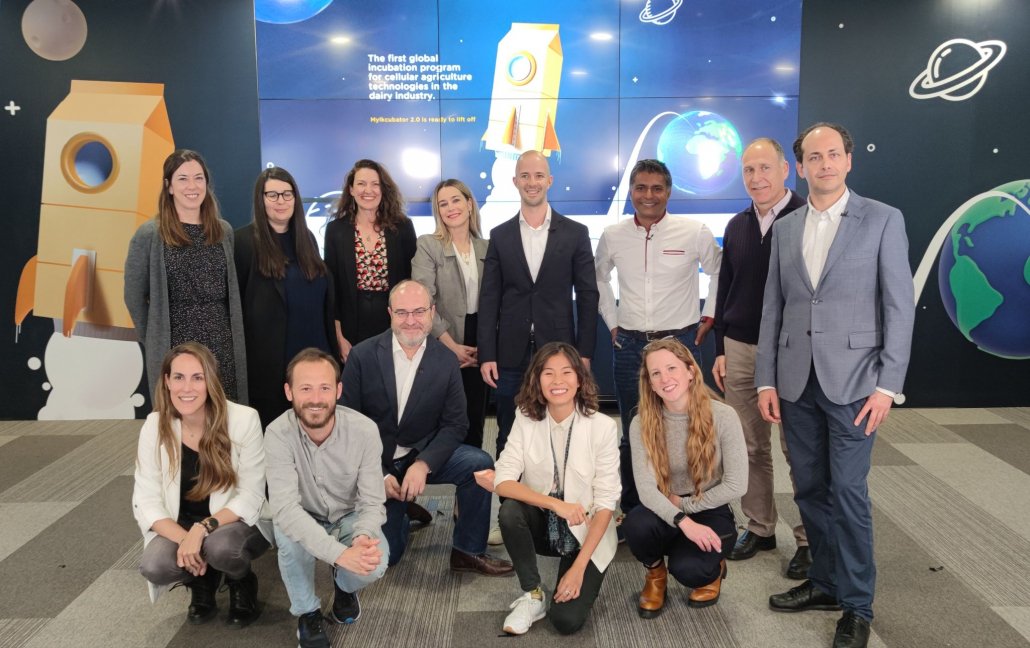
Pascual, a leading Spanish manufacturer of dairy products and beverages, has launched Mylkcubator 2.0, the second edition of the global incubation program for cellular agriculture technologies in the dairy industry. The initiative has been launched from the group’s Corporate Venture unit, Pascual Innoventures, in collaboration with Eatable Adventures, one of the top three global foodtech accelerators. The first edition of the program had recently been completed by four disruptive startups worldwide.

Mylkcubator 2.0 will last 6 months, from selection to the demo day. The goal is to enroll a new cohort of up to 5 startups or scientific projects, with innovative solutions in the cellular agriculture spectrum for the dairy industry within the following technologies: molecular farming, fermentation based, cell based, and applied technologies in this field. All the details about the program are available on the official website mylkcubator.com.

Pascual Innoventures has flexible venturing models that build, collaborate and support Foodtech startups in its early stages. The incubator will help the selected startups in their business and R&D advancement strategies, preparing them for growth and investment rounds.

In the words of Gabriel Pascual, director of Pascual Innoventures “The quality of the startups selected in the first edition has been amazing and shows us that this is, clearly, the way to go. The visibility of these projects as well as the investment rounds that they are receiving is a sign that the industry is prepared for this technological transition. Pascual has been a pioneer in shaping the path of innovation and non-conformism. An attitude that has been hatched generation after generation from my grandfather until our generation”.

On the other hand, José Luis Cabañero, CEO and founder of Eatable Adventures, has remarked “Mylkcubator has attracted the attention of companies, technology centers and professional investors from all over the world demonstrating that there is a great opportunity in the market to implement scalable technological solutions to future proof the dairy industry”. Proof of this is that investment in the dairy segment has tripled in 2021, compared with 2020, according to Dealroom data analyzed by Eatable Adventures.

The production of dairy products using cell cultures and fermentation techniques, that are complementary within the dairy industry, demonstrate industrial and commercial viability and presents a huge opportunity for the sector from both an economic and environmental point of view.


Mylkcubator website: mylkcubator.com

Cocuus
This round was led by Big Idea Ventures, Cargill Ventures, Eatable Adventures and Tech Transfer Agrifood.

The Spanish startup Cocuus has raised 2,5 million euros in its Pre Series A funding round for its innovative process for producing plant or cell- based animal protein food analogs. The company achieved this round after completing Eatable Adventures acceleration program, one of the top three globalaccelerators for foodtech startups.

The round was led by Big Idea Ventures, the global alternative protein fund, the U.S. multinational Cargill Ventures, the Spanish accelerator Eatable Adventures and Tech Transfer Agrifood. With a capital injection of this size, the startup can scale its business model and expand into other international markets, enabling them to utilize their disruptive 3D bioprinting and robotics technologies to create more sustainable and nutritious food products.

Patxi Larumbe, CEO and founder of Cocuus states “We are very proud to have attracted the interest of international investors with this round of financing. Thanks to this capital injection we will be able to bring our technology within reach of corporations that want to print proteins on an industrial scale”. In addition, the Founder and Managing General Partner of Big Idea Ventures, Andrew D Ive, also highlights “At Big Idea Ventures, we invest in technology which impacts the alternative protein industry’s entire value chain. Cocuus’ technology addresses a major pain point of structured plant- and cell-based meat production methods scalability. We are thrilled to support this innovative team and we look forward to
seeing their scalable food technology making an impact across the world.”

On the other hand, José Luis Cabañero, CEO and founder of Eatable Adventures notes, “The Spanish foodtech startups’ ecosystem is consolidating very quickly, attracting major investors and international corporations. Through Eatable Adventures, we offer our services to startups and corporations around the globe to accelerate the process of transformation and innovation in the food value chain”.

As Cabañero points out, this current environmental and world population scenario calls for a rethinking of production methods to achieve a much more sustainable and efficient food system. According to FAO data, in 2050, in order to feed a population of 9.1 billion, food production will have to increase by 70% and meat production by more than 200 million tons.

Cocuus, along with MOA Foodtech, Proppos, H2hydroponics, and Innomy have been selected as finalists for the first edition of Spain Foodtech, the acceleration program of Eatable Adventures supported by the National Center for Technology and Food Safety (CNTA) and ICEX Spain Export and Investment.

Cocuus has been awarded by the international Quality Innovation Award (QIA) in the category of Innovation in Microenterprises and Startups, after winning the 2021 national award.

Food 4 Future

Food 4 Future– Expo FoodTech (#F4F2022) the international reference forum where food and beverage industry professionals learn about the latest trends, solutions, and technologies to optimize and innovate throughout the value chain, will take place from May 17 to 19 in Bilbao. 

This year, Food 4 Future celebrates its second edition which is expected to attract more than 7,000 congress participants and 253 exhibiting brands. A meeting point for innovation managers, IT managers, marketing managers, and CEOS of the food industry, emphasizes the major challenges of the industry: sustainability, food safety, and the digitization and automation of industrial production processes. 

Food 4 Future encourages the transfer of knowledge and experience among international professionals and experts, including renowned scientists and researchers, startups that are redesigning the food industry, top chefs, and representatives of the public administration. Food 4 Future, organized by NEBEXT and AZTI, has the support of the Basque Government, the City Council of Bilbao, the Provincial Council of Bizkaia, the BASQUE TRADE, ICEX, and the Ministry of Agriculture, Fisheries and Food of the Government of Spain; and the associations and collaborators that are leaders in this industry as HAZI, NEIKER, ELIKA, EIT Food, ILSI Europe, Food for Life, SPRI, Eatable Adventures, SanTelmo Business School or IASP (international association of science parks and innovation areas). 

Agenda

The congress will feature more than 70 sessions and vertical forums for each sector of the agri-food industry, which will focus the debate on the major challenges facing the industry, with special emphasis on the application of automation and robotics, the transition to the new Industry 4.0, and content related to sustainable and healthy food.

As strategic partners in this event, we would like to highlight that Eatable Adventures’ Ecosystem Manager & Innovation Consultant Paula Álvarez Ameijeiras will moderate a round table where leaders in the industry such as Anthony Finbow, CEO of Eagle Genomics, Charis Galanakis, R&I Director of Galanakis Laboratories & Mathew Gorton from New Castle Unversity will be discussing “R&I for sustainable and healthy food systems” on May 17th at 12.00h. 

Furthermore, Eatable Adventures’ ​​Managing Partner & Co-Founder Mila Valcárcel will be speaking in a session about “Building a strong global foodtech ecosystem from Spain” on May 18th at 12.45h. 

For more details about the Agenda of Food 4 Future Summit visit their webpage.


demoday mylkcubator

The first edition of Mylkcubator, the incubation program launched by Pascual Innoventures in collaboration with Eatable Adventures, has held its eagerly anticipated Demo Day event showcasing the advances of the first cohort of startups, at its headquarters in Manoteras, Madrid.

The program not only showcased pioneering dairy projects around the world but also laid the foundation for a new path of development and innovation for the industry to face some of its greatest challenges.

As a culmination of the six-month incubation program, the participating startups presented their final pitches, paving the way for future funding rounds that will allow them to pursue their innovative development and research:  

  • De Novo Dairy, a startup based in South Africa with a mission to create the future of nutrition, the company uses precise fermentation technology to produce animal-free dairy proteins that provide the same sensory experience and nutrition as traditional dairy counterparts. De Novo Dairy is currently developing high-value proteins for the dairy industry.
  • Spanish startup Real Deal Milk develops casein and whey proteins through precision fermentation technologies with the same functional properties as traditional dairy components, with the aim to produce dairy substitutes equivalent to traditional dairy. 
  • Using bioengineering & microbial fermentation, Zero Cow Factory is reinventing dairy ingredients with India’s first milk and milk products (certainly the world’s first A2 milk protein) using bioengineering the microbes & microbial fermentation. The Zero Cow team is developing a proprietary technique to recreate milk proteins to develop real dairy products that are ethical, safe, delicious, and identical to cow milk.
  • Pure™ Mammary Factors based in the USA are accelerating the state of the art in cell-cultured dairy by crashing the cost of production by the development of growth factors used in culture media. The startup aims to make cell-cultured human milk affordable and accessible by selling food-grade off-the-shelf growth factors around the world.

Pascual Innoventures is committed to driving innovation to create a more sustainable future for all, anticipating the current trends that will shape the foods of the future. Due to the success of the first edition of Mylkcubator, Pascual Innoventures has already announced the call for the second edition of the program.

According to Sejal Ravji, director of Pascual Innoventures, “the success of the Mylkcubator Demo Day not only reaffirms the great response this program has had in the sector worldwide but also confirms what we at Innoventures already knew, in order to develop the dairy products of the future we have to continue to invest in transformational innovation and ambitious technological projects, as is the case with the four startups that have been working with us since the start of Mylkcubator six months ago”.

Furthermore, according to Jose Luis Cabañero, founder and CEO of Eatable Adventures, “In the coming years, we expect to see increased innovation in the alternative protein space, with breakthroughs in cellular agriculture and precision fermentation technologies. Mylkcubator is a pioneering global program that is and will continue to be at the forefront of developing the dairy of the future.”

Singapore, Israel, and Madrid? FoodTech is gaining momentum in the city trying to become a global reference. Public administrations and private agents have aligned their interests to position the region in one of the sectors of the future. These intentions were evident during the first thematic session of the Innodays, a series of sectoral meetings to promote entrepreneurship in the field of innovation organized by the Madrid City Council, the Community of Madrid, and the Madrid Innovation Driven Ecosystem (MIDE).

Spain as a FoodTech Nation

Among all the guests at the first InnoDays, Eatable Adventures’ Managing Partner, Mila Valcárcel, brought up a relevant topic: the geopolitical changes (and the consequent scarcity of food or raw materials) that will act as accelerators of changes in the agri-food value chain with the incorporation of new technologies.

These changeovers are led by technologies such as robotics, fermentation, bioprinting, artificial intelligence, IoT, new ingredients, cellular technology, or innovations in packaging. “We like to talk about Spain as a FoodTech Nation, a country that is much more than gastronomy and a world power in the agri-food field,” Valcárcel detailed. In fact, 10% of the national GDP depends on these sectors.


Startups, the main drivers of the industry

More than 30,000 companies are engaged in agri-food in Spain. “The great challenge for the industry is digitization, technology must reach the whole system. We also need more innovative and sustainable value chains, as is the case in other sectors”. Despite everything, the Spanish FoodTech and AgroTech environments have gained dynamism at full speed, as evidenced by the 700 million in investment attracted by agri-food last year, almost triple compared to 2020.

In this ecosystem, startups are clearly in focus, they are companies that are developing and generating interesting movements at different levels. As for Madrid, there are 407 startups operating in the region, representing 25.29 % of the national total. “They are companies that touch the entire value chain, from production to logistics. Madrid can be the Silicon Valley of food, the key is to work together to achieve it,” assured Mila Valcárcel.


Madrid, the Silicon Valley of food

Madrid should have a global ambition regarding its positioning on the FoodTech board. “We should take advantage to change what doesn’t work. For example, technology transfer is fundamental but very complex in Spain. We must mix technology and science to generate ambitious startups capable of solving global challenges.”

At a time when supply chains are breaking down and food autarky is on the rise, Spain has scientific teams, first-rate facilities, and a testing ground, such as Madrid Food Innovation Hub, where everything can be tested. “Let’s develop technology, intellectual property, and a solid business model around food,” said Valcárcel.


Educating the consumer

Meanwhile, we need to educate consumers so that they are aware of and able to exploit the disruption.  “For starters, FoodTech will allow us to make food accessible to everyone. This doesn’t mean we’re going to stop having traditional livestock or crops. It means there will be many other ways of doing things in the face of a world population that is growing and demanding functional foods, proteins…”

“It is important to work with the citizen on issues of perception and valuation. Countries like Singapore do a great job of dissemination. In this way, the consumer understands that there is nothing wrong with consuming laboratory meat or lettuce harvested in a vertical garden”.

During its first day, InnoDays aimed to highlight the needs of the entrepreneurial ecosystem and generate synergies between it. Watch the recorded session here.

The first edition of our acceleration program Baking the Future, came to an end yesterday with the celebration of the “Demo Day”, a virtual event that aimed to present the projects of the three accelerated startups and communicate the opening of a second edition.

Innovation is part of our DNA. The company itself was born from an idea that revolutionized the bakery sector and since then, Europastry has always sought to be at the forefront of the sector, anticipating new trends and offering its
customers the most disruptive products. “If you stop innovating you end up losing competitiveness and capacity for growth. That is why it is very important to keep reinventing yourself and never think that what you have is for life“, said Jordi Gallés.

The Baking the Future acceleration program plays a very important role in this constant renewal. Startups help us to innovate and open up new opportunities that allow us to take our products to the next dimension, while at the same time we provide them with all of Europastry’s muscle so that they can grow and develop their projects with the greatest possible resources.

Baking the Future

“CEREAL DEMO DAY”

The celebration of the “Demo Day” took place at Cereal, Europastry’s Innovation Center, where the first idea was born and where today we continue to work with great passion to bring to market the best products in the sector. To conclude the first edition of the Baking the Future program, the three accelerated startups presented their projects whose drivers are sustainability and health:

Agrain

  • The Chilean startup Done Properly with its cutting-edge technology which, through a bioprocess of fermentations, manages to reduce the amount of salt enhancing the natural flavors of food.
  • The Danish startup Agrain with its new way of producing food by recycling grains used in the brewing industry.
  • Spanish startup Bread Free, is the world’s first company capable of creating gluten-free wheat flour to make bread, pasta, and other bakery products.


BAKING THE FUTURE OPENS A NEW SELECTION PROCESS

Building an open innovation model for Europastry is the goal of the Baking the Future program. For this reason, we are opening a new selection process for Those startups that want to revolutionize the bakery sector with projects related to sustainability, improving the consumer experience, health, and food solutions and technologies aimed at improving production without losing sight of the quality of the products.

Starting today, those interested in being part of the project can apply on the Baking the Future website. Selected startups will have access to all the company’s resources – from mentoring sessions, workspace, and access to Cereal’s state-of-the-art technology labs to business plan design – to develop their products and test their viability in the market.